


Hong Kong - Utopia to Dystopia, at Forum Gallery, Vancouver, 1994
- yasinvisram
- Oct 20, 2022
- 2 min read
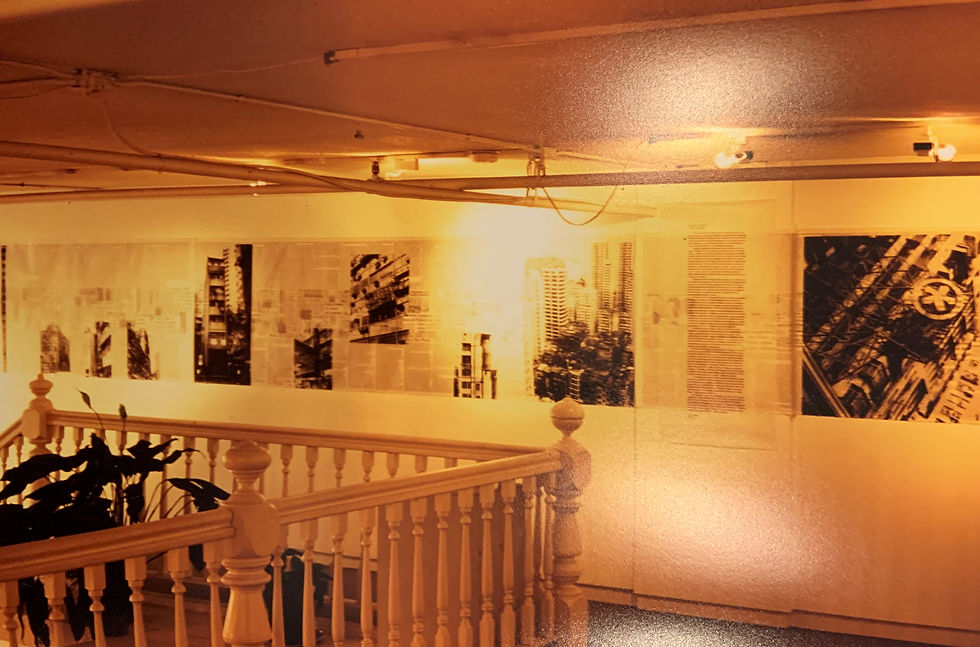
More Often than not when utopia is the goal - dystopia is the reality. Caught between east and west, Hong Kong represents (and perhaps still does) a utopian ideal. With this ideal in mind the colonizing force sought to impose its own sense of order; like any parent , to create in its own image but ultimately as an "ideal" version of itself. And became a haven both politically and economically from the Mainland.
The physical manifestations if his this colonial order came in the form of iconic images of architecture. The new built structures gave physical presence to the colonial traditions - a symbolic presence of the home nation. Hong Kong offers many examples of classical colonial architecture of the late 19th century and early 20th century, and now the 21st century. Equally, there are examples of the iconic modern buildings which establish a link to European movements of the same period. This linkage to European traditions has maintained itself only in physical image. The process by which the built environment is shaped is also influenced by the cultural dichotomy. Examples, of a 'genuine' vernacular of early Hong Kong are rare here, and exist only in the rural areas. On the whole, Hong Kong looks very 'western'. However, the issues of climate, landscape, planning laws, densities required for feasible development, and the construction methods enforce a very local context in architecture.

Hong Kong has developed through a random and rampant, but constant process. The extortionate and ongoing increase in property values fuels the development process from one end, and the ever lessening quantity of land from the other. This city is constantly flexing and restructuring itself to be able to squeeze-out even more buildable land . The results are an over developed built environment that appears so exaggerated in scale in proportion to the actual land mass, there is a complete distortion of conventional reality - it is a place of extremes.
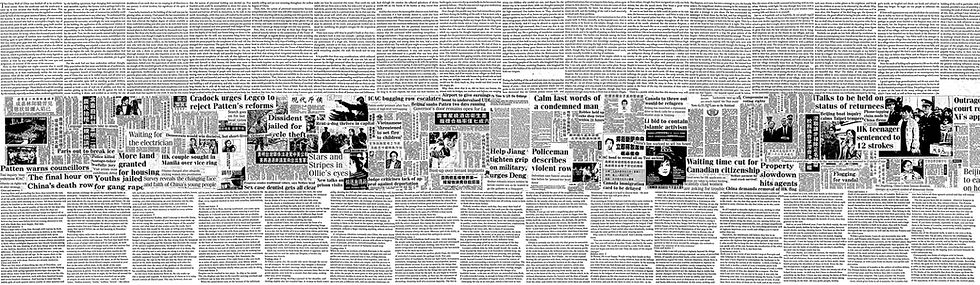
Hong Kong's extreme built environment is rooted in its mountainous topography. This landscape is immediate, confronting the buildings which are rooted in it. The physical constraints of constructing a high rise building on the side of a mountain poses 'exaggerated' problems and even more 'exaggerated' solutions. Hong Kong is often ascribed with a utopian metaphor of a 'vertical city' due to the extraordinary scale of many of its structures cause an immediate shift in the visual scale. Buildings are monumental without being monuments. Here buildings are tall, solid in appearance with small openings. Construction methods are rough and fast, so an oversized concrete structure with a seemingly pristine finish is inevitable. Due to the shortcomings of building technology the life span of a building is relatively short compared to buildings elsewhere in the west - buildings of ten ago are considered to be 'old' in Hong Kong and need to be refurbished , both inside and outside.


Comments